The results for Quarter 4 2025 are as follows:
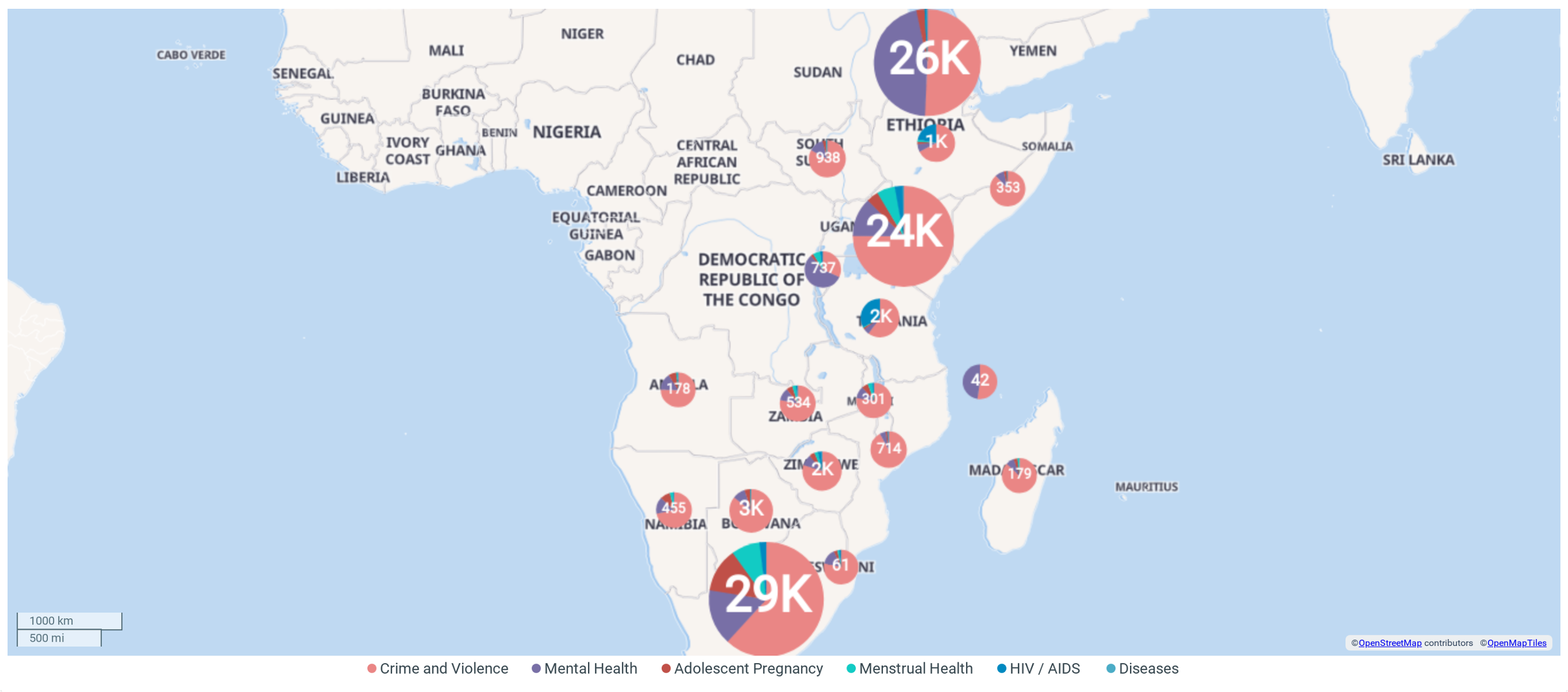
Sexual assault investigations dominated the dataset, accounting for the largest thematic share, with over 32,000 results linked to rape, defilement, domestic violence, and ongoing police appeals for public assistance.
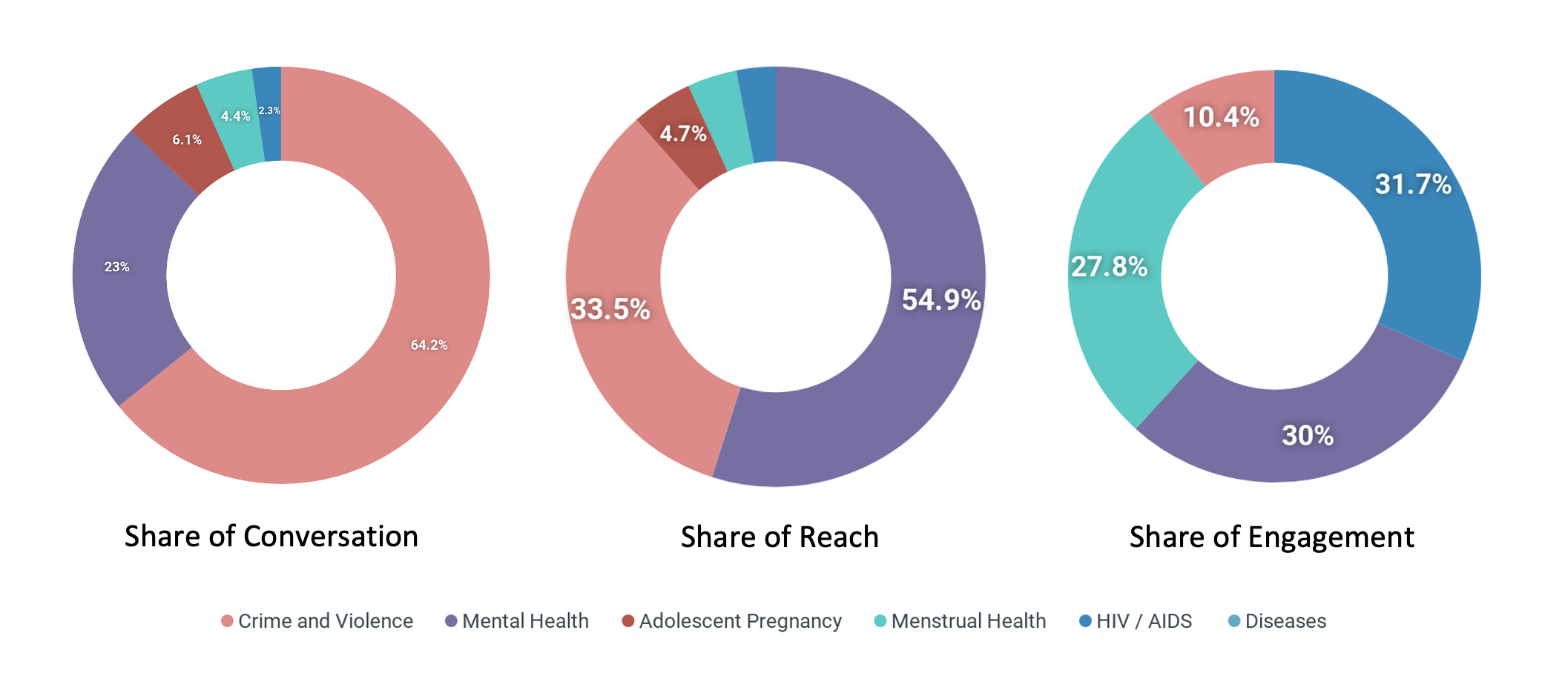
Crime and violence comprised 64.2% of total results but generated only 10.2% of engagement, suggesting high visibility but lower interaction, possibly indicating desensitization or fatigue.
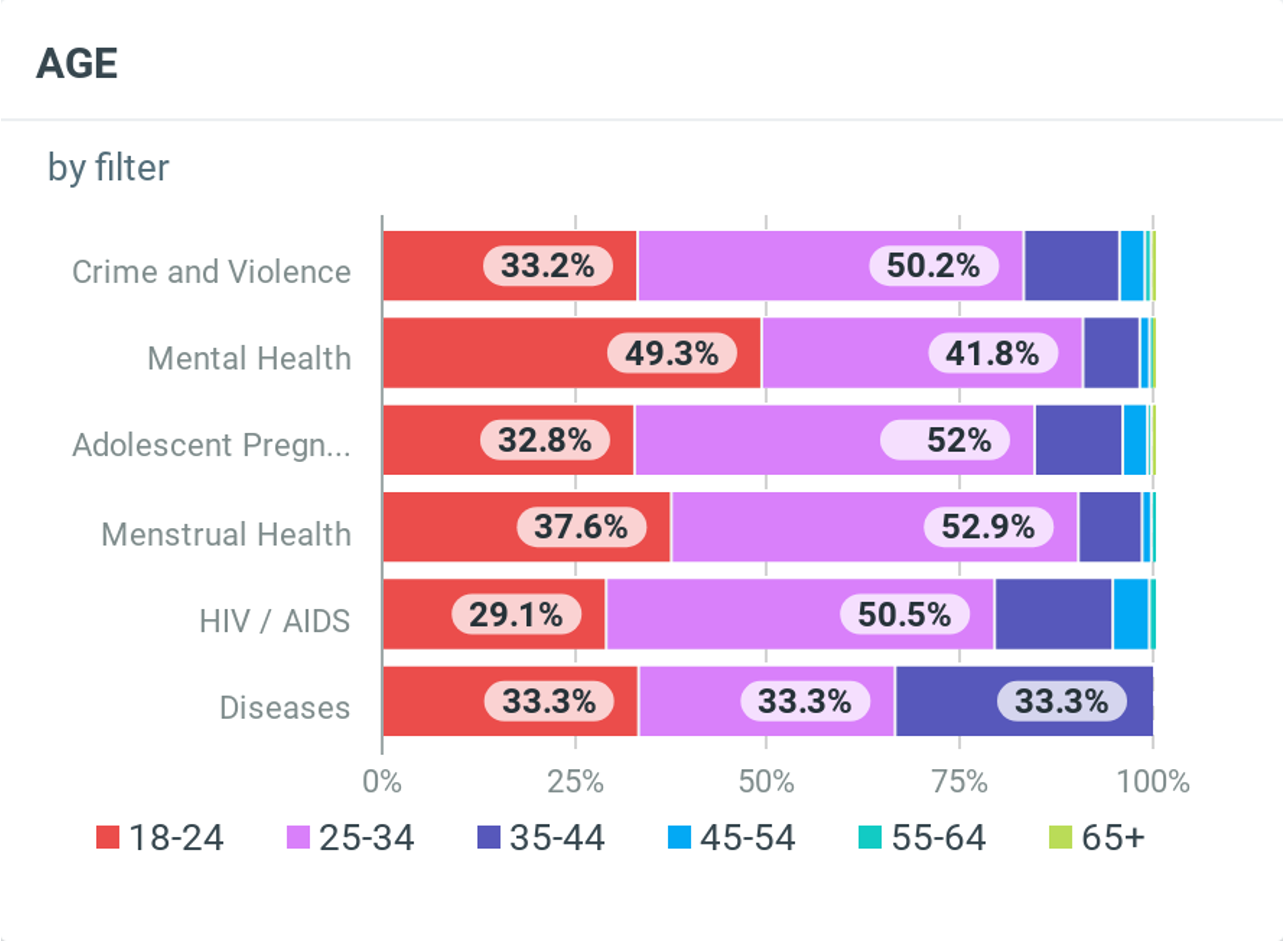
Mental health represented 23% of total volume yet drove 55% of engagement, with young people aged 18 to 24 contributing nearly half of related posts, signaling strong
youth interest.
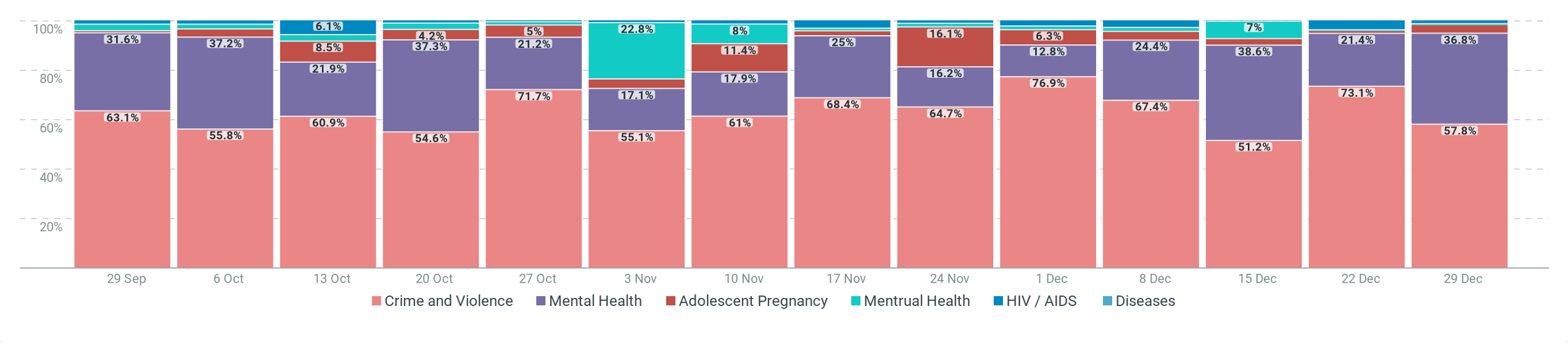
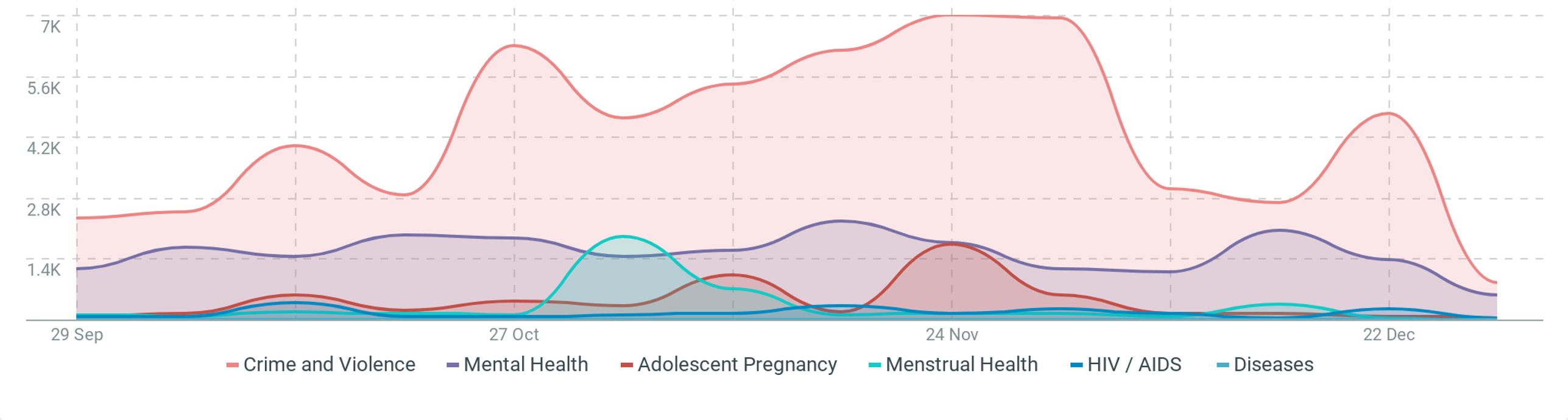
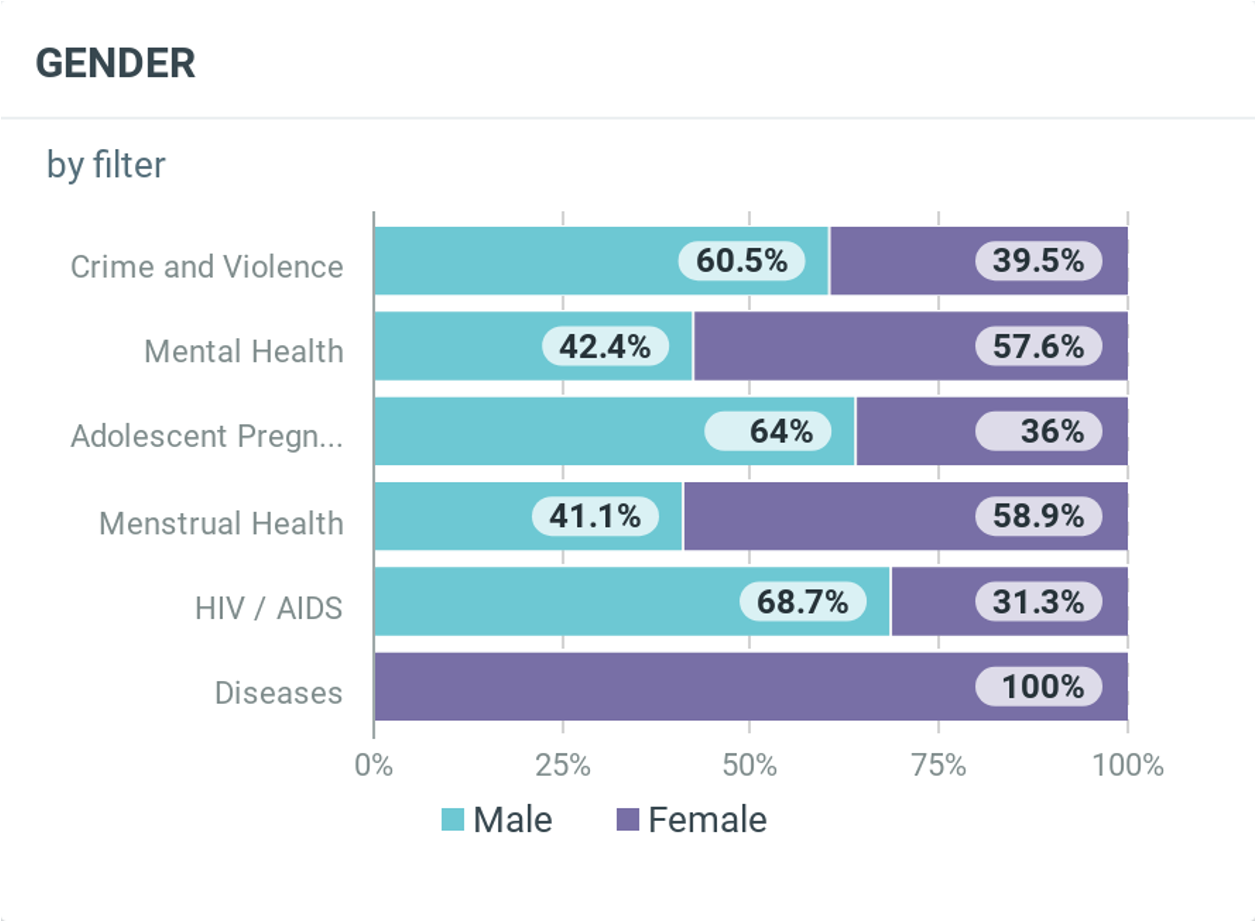
Conversations around HIV and menstrual health showed gendered patterns: men were most active in HIV discussions, while women led menstrual health conversations.
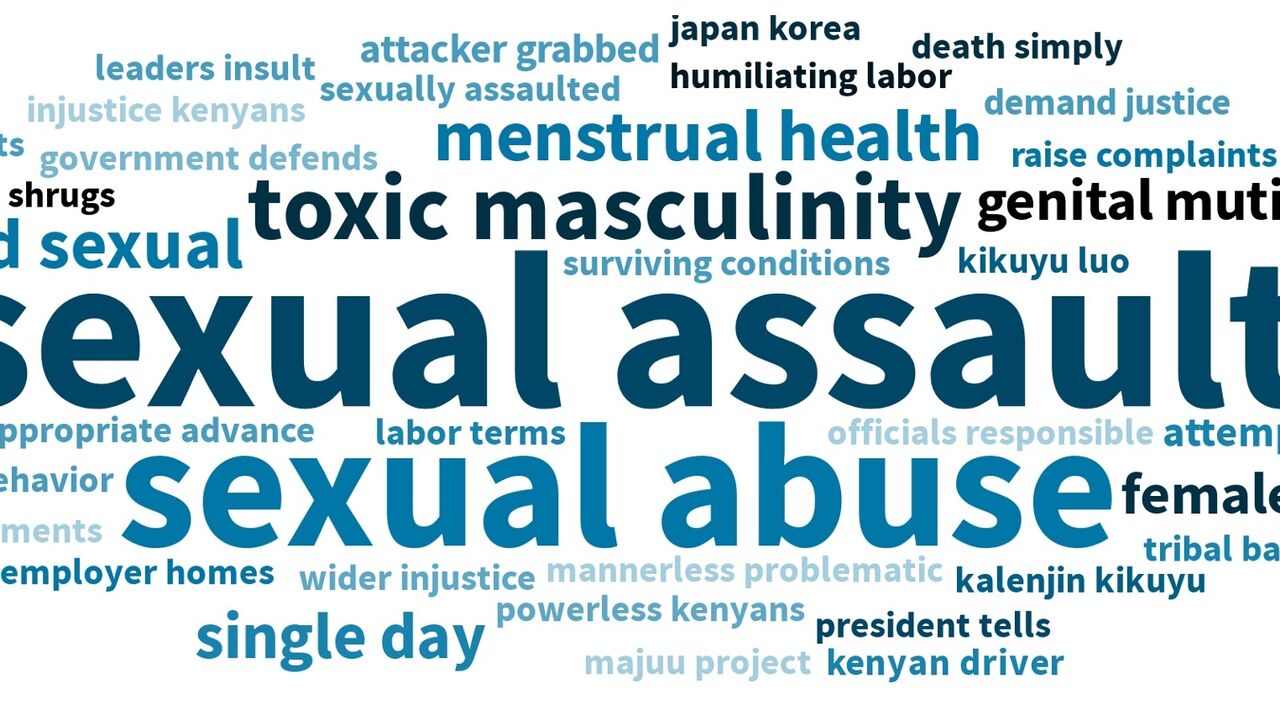
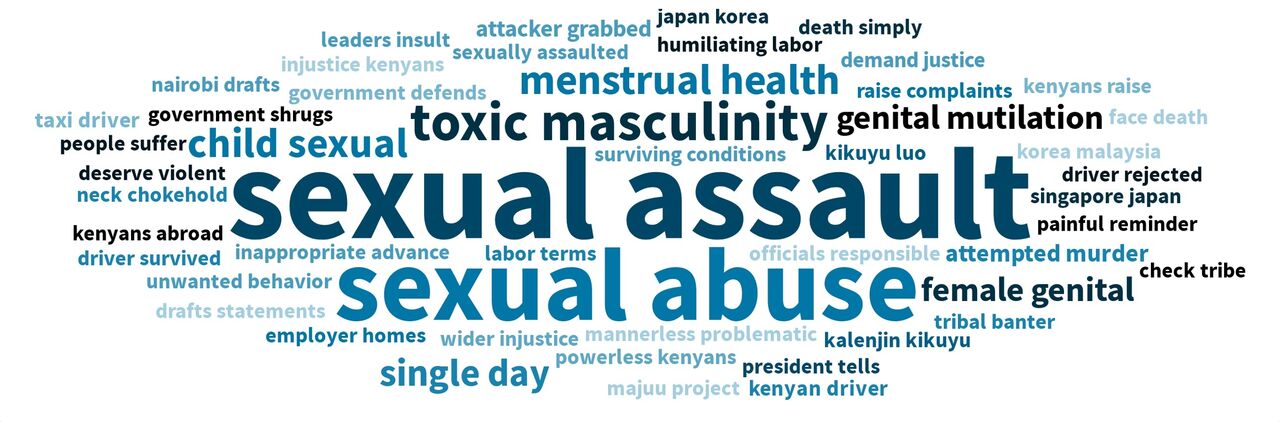
The most recurrent phrases across the dataset were "Sexual assault,” “sexual abuse,” and “toxic masculinity” reflecting both institutional accountability concerns and contested gender narratives.
Debate around “toxic masculinity” was polarized. Some users linked it to violence and harmful norms, while others rejected the term outright, framing it as anti-male rhetoric.
The “Epstein effect” triggered renewed scrutiny of child sexual abuse, trafficking, and judicial bias, with ESA commentators drawing parallels to local power structures and court systems.
Country level discussions reflected both national legal cases and broader global narratives. South Africa and Botswana focused heavily on investigations and sentencing; Kenya and Tanzania showed strong intersections between religion, politics, and SRHR; Ethiopia and Zambia highlighted child protection crises and systemic impunity.
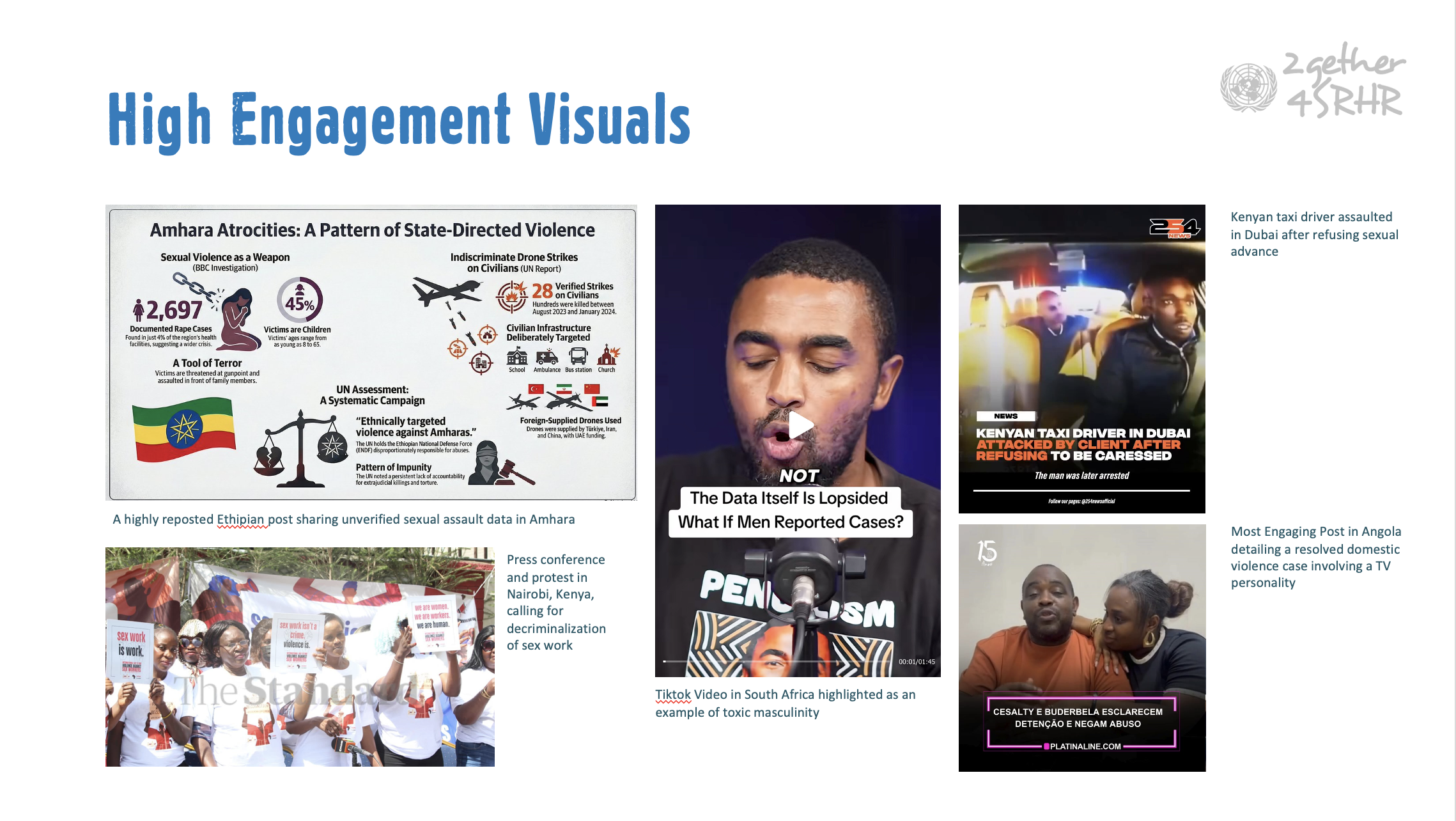
High engagement visuals included unverified assault statistics, viral TikTok content framed as toxic masculinity, and media reporting on domestic violence cases, demonstrating how emotive or sensational framing drives amplification.
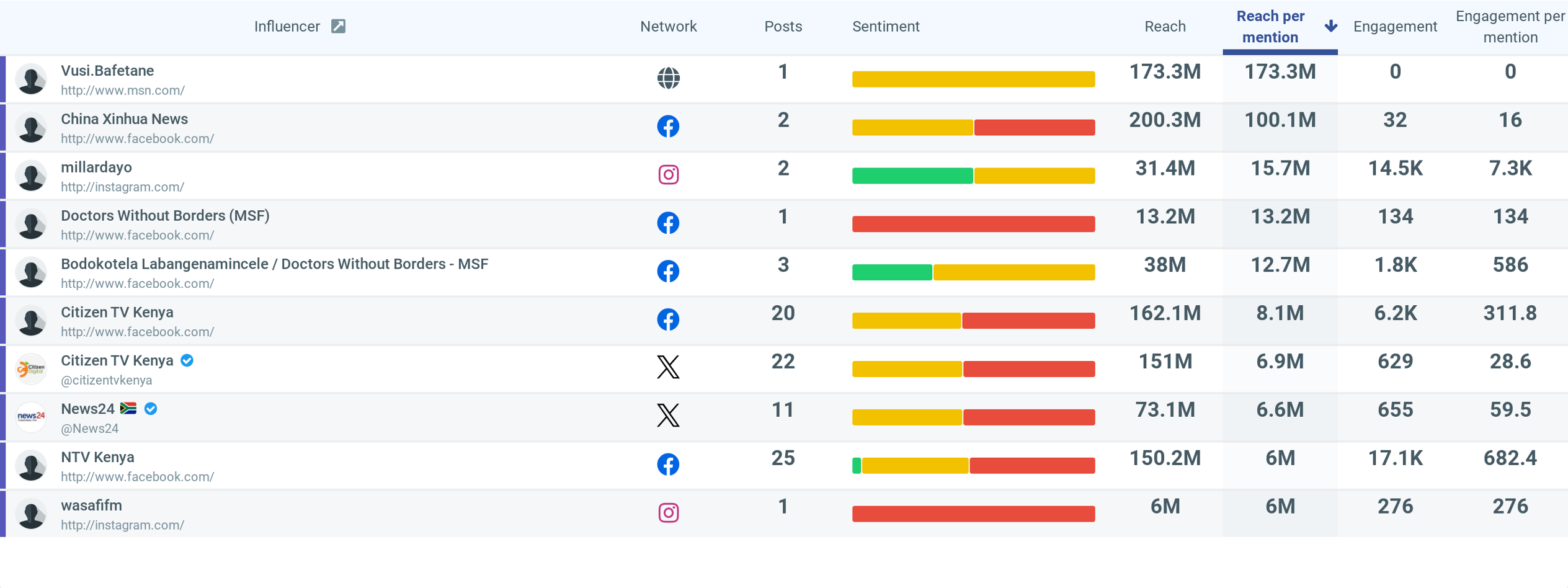
The highest reach influencers on SRHR in the region this quarter were:
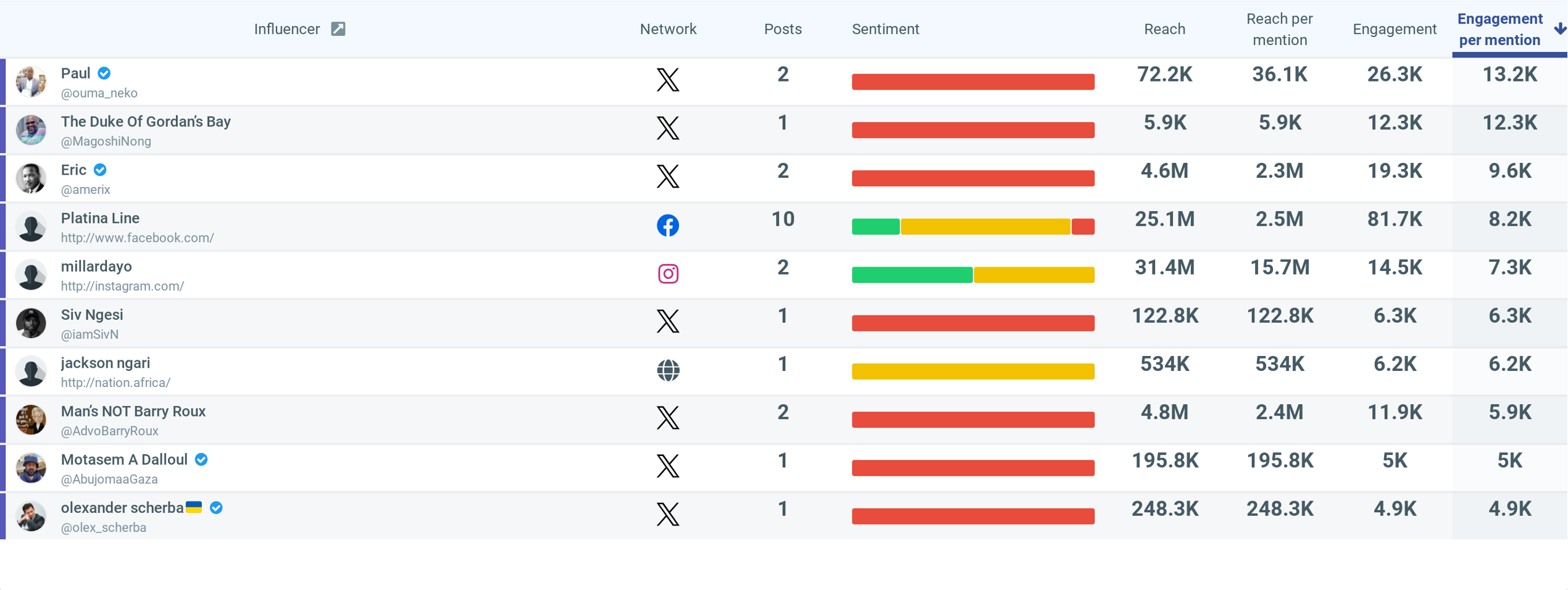
The most engaging influencers on SRHR in the region this quarter were:
The posts with the highest engagement on SRHR across the region in Q4 2025 were:
Summary of research findings: SRHR-related mentions focused on justice for survivors of sexual violence, with recurring outrage over rape, defilement and claimed weak institution responses. Engagement was driven by survivor testimonies, judicial failures and reproductive health-related content, sometimes distorted. South Africa, Kenya and Uganda led the engagement.
Trends
- Sexual violence & justice gaps: Repeated outrage followed reports of rape and child abuse, often amplified by public figures and media pages demanding accountability. Judicial failures such as bail grants, sentencing delays, and acquittals in defilement cases triggered frustration and debate.
- Menstrual and mental health: These narratives gained traction, including praise for menstrual leave policies and destigmatizing efforts.
- Disease prevention: STI and HIV prevention posts promoted PrEP, condom use, and clinical education; however, content advocating for traditional remedies continued to spread. Budget fund cuts for disease prevention was also a cause of concern among users.
Narratives
- Positive: Stories of survivors and youth-led campaigns drove solidarity, especially when emphasizing healing, dignity, and rights.
- Negative: Public anger centered on lenient sentencing and delayed trials, while some posts accusing local authorities of double standards regarding abuse cases.
Potential misconceptions and misinformation
- Traditional or herbal reproductive remedies circulated widely, with posts promoting unverified cures for infertility and libido, while prominent accounts suggested that some sexually transmitted diseases are ‘strategically’ planned.
- Fertility misinformation persisted through posts promoting herbal cures for infertility and erectile dysfunction.
- Some content linked menstruation or infertility to supernatural causes or taboos.
Please note that any views reported on as part of the social media landscape analysis do not necessarily reflect the views of UNICEF or partners.