Finding Her Voice: How the GAIA Toolkit Is Supporting Adolescent Girls in Somalia

Stay Informed
Get the latest news delivered to your inbox
For 14-year-old Hafsa, speaking in front of others once felt impossible.
At school in Hargeisa, she enjoyed learning and spending time with her classmates, but when it came to sharing her thoughts in class, fear often held her back. Worried about being judged, she preferred to stay quiet, even when she had something important to say. Today, Hafsa tells a different story. "Previously, I always felt scared and shy to talk openly in front of people, but now I feel relaxed and more confident expressing my views and opinions," she says.
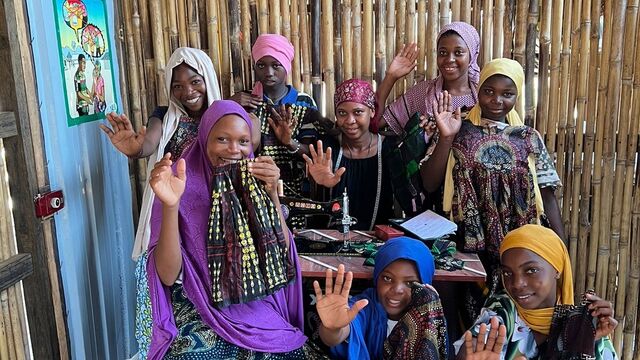
Hafsa is among a group of 80 adolescent girls participating in the Girls Are In Action (GAIA) initiative, designed to help girls build self-confidence, strengthen communication skills and develop the agency needed to make informed decisions about their lives. The programme aims to amplify girls' voices, build self-esteem and create safer environments where adolescent girls can learn, connect and thrive.
In Somalia, UNICEF is working in partnership with the Women and Action Against Poverty Organization (WAAPO), a women-led organization, to introduce the toolkit and create safe, supportive spaces where girls can come together, share experiences and strengthen essential life skills.
For Hafsa, the experience has been transformative. Through group discussions, teamwork activities and peer learning sessions, she discovered that many other girls faced the same insecurities and challenges she did. The programme provided an environment where participants felt listened to, respected and encouraged to express themselves openly. As her confidence grew, so did her participation at school. She began raising her hand in class, contributing during group work and interacting more comfortably with teachers and classmates. She also found herself encouraging quieter girls to join discussions, something she never imagined doing before.
Behind many of these moments was Rahma, one of the facilitators leading the sessions. For Rahma, supporting girls through the toolkit has been one of the most meaningful experiences of her work with adolescents.
"I facilitated sessions with participants from different communities, covering topics such as self-confidence, communication, leadership, education, peer support and personal wellbeing," she explains. When the programme began, many girls arrived feeling hesitant and unsure of themselves. "At the beginning, many were shy and hesitant to speak in front of others," Rahma recalls. "However, over time, I observed significant changes in the way they interacted, shared ideas and participated in discussions."
As participants became more comfortable with one another, they began sharing personal experiences, supporting their peers and finding their voices. For Rahma, one of the most powerful outcomes was the sense of trust that developed within the groups. "The discussions encouraged them to express themselves openly, share personal experiences and support one another," she says.
That trust became especially important when some participants felt comfortable enough to discuss personal challenges they had never previously shared. Some married adolescent girls privately disclosed experiences of abuse, emotional hardship, and harmful treatment. Many had never spoken about these experiences before due to fear, stigma, or the absence of trusted support systems.
"For me, the trust built by the programme underscored the importance of creating safe spaces where adolescent girls feel heard, respected, and supported," she explains. Building trust required patience, consistency, and a supportive approach. Navigating sensitive discussions while maintaining confidentiality and emotional wellbeing also demanded careful facilitation. The safe environment created by the programme helped girls feel heard, respected and supported while also encouraging them to seek guidance when needed.
The introduction of the GAIA Toolkit in Somalia to 80 adolescent girls initially builds on lessons learned through its implementation elsewhere in the region. The toolkit was developed to support adolescent girls in humanitarian and development settings, equipping them with practical skills related to self-confidence, girls' rights, bodily autonomy, peer support and personal wellbeing. It also aims to strengthen girls' resilience and foster networks of support among adolescents.
Early experiences from Mozambique, where the toolkit was piloted, demonstrated promising results. Girls who participated showed improved confidence, stronger agency and greater awareness of their rights. These encouraging results helped inform efforts to bring the approach to Somalia, where many adolescent girls face barriers to participation, leadership and self-expression.
Some also shared that they had started expressing themselves more openly at school and within their families, particularly on issues related to education and the challenges affecting girls in their communities. "Participants who were initially reserved began contributing more actively, encouraging their peers and confidently presenting ideas to the group," she says. The programme has also contributed to her own development as a facilitator, strengthening her leadership, communication and listening skills while deepening her understanding of the realities facing adolescent girls.
For Hafsa, the impact is visible every day. The girl who once sat silently in the classroom now speaks up with confidence. She participates more actively in school, shares her ideas openly and believes in her own potential. Her journey reflects the wider goal of the GAIA Toolkit: helping girls recognize their strengths, build resilience and become active participants in shaping their futures.
As UNICEF and WAAPO continue working with adolescent girls across communities, stories like Hafsa's demonstrate what can happen when girls are given the support, encouragement and safe spaces they need to thrive. Through mentorship, peer connection and opportunities to develop their voice, girls are discovering that they already possess the power to lead, participate and create change in their own lives.
The GAIA toolkit is part of the broader 2gether 4 SRHR programme, a joint initiative of UNAIDS, UNFPA, UNICEF and WHO, supported by the Government of Sweden. UNICEF and the Ministry of Employment, Social Affairs and Family (MOLSA) have trained 25 women leaders and adolescent girls to deliver the GAIA programme and to help empower girls in Somaliland.