
Stay Informed
Get the latest news delivered to your inbox


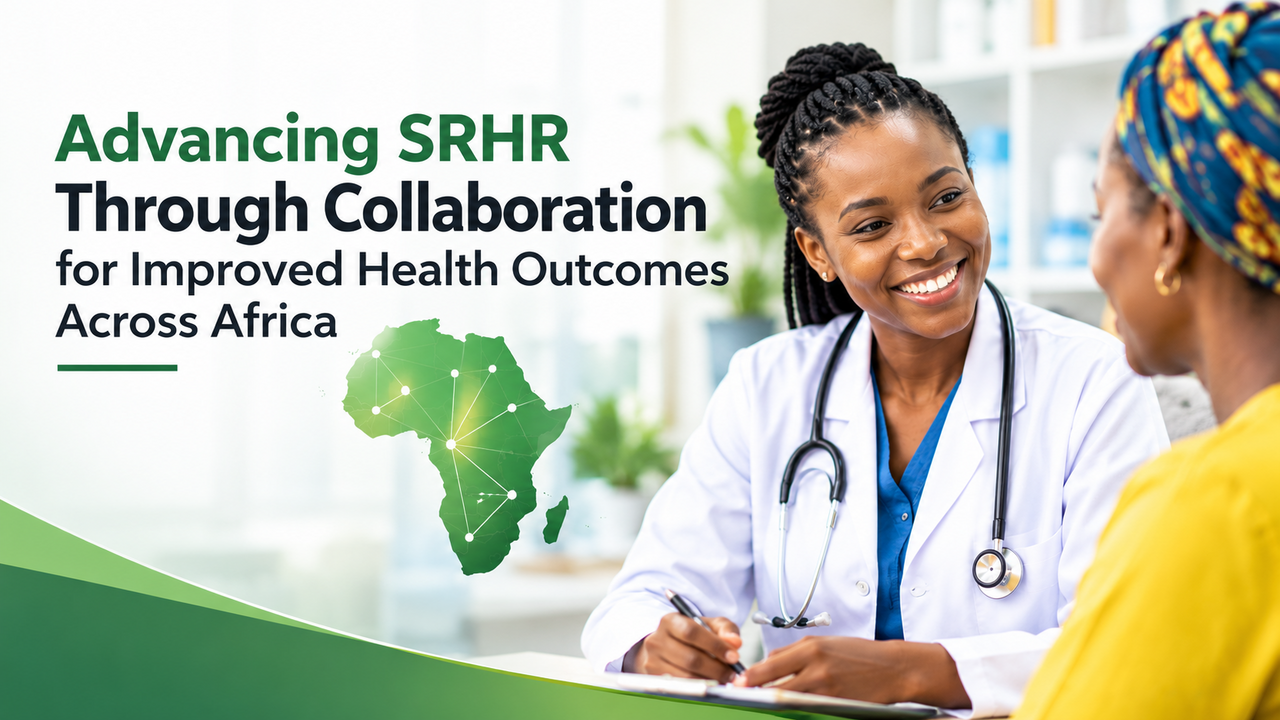
Advancing SRHR Through Collaboration for Improved Health Outcomes Across Africa
This story was first published on the APHRC website
Naisula Nataana*, a 22-year-old young woman, has already lived through many of the challenges Africa’s sexual and reproductive health and rights (SRHR) commitments are intended to address. Married as a child after undergoing female genital mutilation, Naisula is now a mother of four and is six months pregnant with her fifth child. In her remote community in Samburu County, Kenya, distance, insecurity, and limited access to quality health services determine when and where she can seek care and whether she has the information and agency to make decisions about her health and future.
Naisula’s life reflects that of many African women, adolescents, and young people across Africa. A continent with progressive policies and regional commitments that do not always translate into better health outcomes. Closing this gap requires more than individual programs or institutions working in parallel. It calls for collaboration that brings together African institutions, governments, regional bodies, civil society, communities, and development partners around shared evidence, stronger accountability, and collective action.
Through the Regional Access and Accountability for Increased SRHR Equity in East and Southern Africa (RAISE SRHR) Program, APHRC is working with partners to strengthen the systems, institutions, and accountability mechanisms needed to translate SRHR commitments into measurable improvements in people’s lives.
With funding from the Swedish International Development Cooperation Agency (Sida) and the European Union, APHRC is implementing RAISE SRHR in collaboration with the 2gether 4 SRHR partnership (UNFPA, UNAIDS, UNICEF, and WHO), and the Clinton Health Access Initiative (CHAI), with coordination from the East African Community (EAC) and Southern African Development Community (SADC) secretariats.
At the heart of this partnership is a shared recognition that no single institution, sector, or country can address complex health challenges. Drawing on its experience in generating evidence, strengthening research and data systems, and supporting the use of evidence in policy and practice, APHRC’s RAISE SRHR is connecting national priorities with regional action and creating sustainable pathways from data to accountability.
The RAISE SRHR program aims to reduce reporting burdens and improve access to timely and comparable evidence. It also aims to enable countries and regional institutions to identify inequalities, track progress, and strengthen accountability for results and resources.
The program is strengthening health information systems, harmonizing SRHR indicators, and improving data quality in eight EAC and SADC Member States, including Eswatini, Kenya, Lesotho, Malawi, Rwanda, South Africa, Tanzania, and Uganda. It is also enhancing the use of health management systems and platforms, such as the District Health Information Software (DHIS2), in eight EAC and SADC Member States, including Eswatini, Kenya, Lesotho, Malawi, Rwanda, South Africa, Tanzania, and Uganda.
Through the program, countries and institutions share experiences and learn from one another. The program organizes regional platforms and country-to-country exchanges, providing governments and technical institutions with forums to share expertise, adapt best practices to local contexts, and collectively address challenges that extend beyond national borders. This approach recognizes that sustainable change is attainable when African institutions can generate, interpret, and use evidence to shape their own priorities and solutions.
To include communities’ voices in policy dialogue and strengthen oversight of service delivery and resource allocation, the RAISE SRHR program is strengthening the capacity of civil society and youth-led organizations. It is doing so by strengthening their capacity to access, analyze, and use data to advocate for the rights of women, adolescents, and youth. This ensures that accountability extends from regional commitments to the people those commitments are intended to serve.
By bringing together researchers, policymakers, regional institutions, technical partners, and communities, APHRC’s RAISE SRHR program reflects a model of collaboration guided by a shared responsibility, mutual accountability, and leadership geared towards transforming lives in Africa.
The model reflects the Center’s commitment to ensuring evidence does more than describe Africa’s challenges; rather, it is collaboratively utilized to strengthen institutions, inform decisions, shape policies, and equip African actors to drive sustainable change. A change that allows girls like Naisula to remain in school, access quality healthcare, make informed decisions about their bodies, and shape their own futures. Change that gives girls like Naisula the choices she never had.
*Naisula Nataana is a pseudonym used to protect the individual’s identity.
Related Content
Advancing self-care interventions for sexual and reproductive health and rights in the WHO African Region: regional roadmap
This regional roadmap provides a strategic framework for advancing equitable access to evidence-based self-care interventions...
Fresh Insights: United to End AIDS: the 2026 Special Report
Four decades into the HIV response, the world stands at a crossroads. UNAIDS' new Special...
Taking Action: A handbook for integrating SRHR, GBV, and harmful practices into national climate policies and action
With six sections, covering SRHR and climate intersections, current NDC reflections, a proposed integration checklist,...
Social accountability animation
In Lesotho, the 2gether4SRHR programme helped to strengthen the link between health facilities and communities using...