Stay Informed
Get the latest news delivered to your inbox

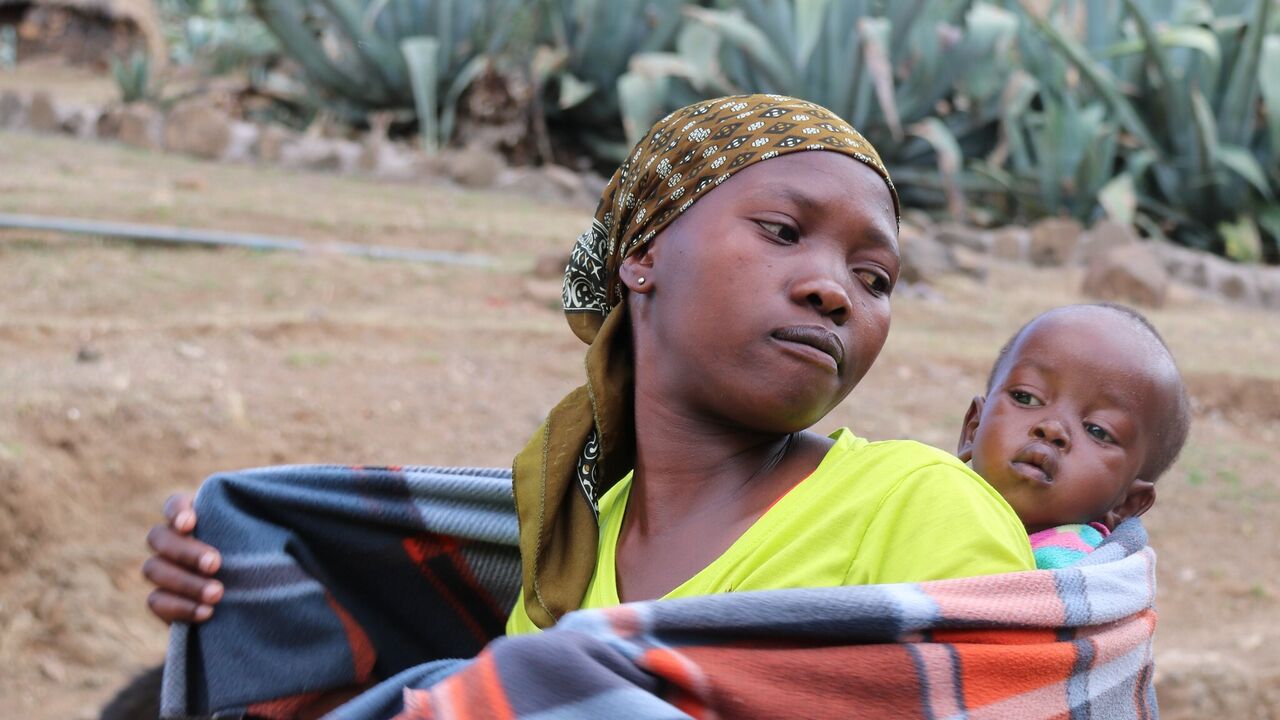
When Nthabiseng* had her first child in 2018, she knew her family’s limits. “If I had another child, I would be stressed because I would not know how I could share the little money among two children,” she says. Choosing family planning after the birth was not just a medical decision, it was an opportunity to provide for her child with what she could afford.
Across Lesotho, women and girls have faced similar - or even worse circumstances. Behind the national maternal mortality ratio of 530 deaths per 100,000 live births are stories of women lost to preventable causes such as haemorrhage, sepsis, and complications of childbirth. This is often worsened by difficult terrain seen throughout the mountainous country, and delayed access to care.
The country has wrestled with health and social challenges requiring investment and coordination beyond just policy and legal commitments. To break this cycle, the Government of Lesotho, supported by the 2gether 4 SRHR programme, launched an ambitious $173 million Investment Case: the cost needed to save the lives of women and girls and advance national development.
By reaching that financial target, Lesotho could save 15,900 lives and prevent more than 344,000 unintended pregnancies by 2030.
Validated in 2025, the Investment Case provides a roadmap for accelerating progress toward national and global health goals, focusing on scaling up interventions such as emergency obstetric care, strengthening health systems, preventing GBV, and ensuring that girls remain in school.
The urgency also extends beyond maternal health. One in three women in Lesotho have endured physical or sexual violence from an intimate partner, and 16 percent of girls are married before the age of 18. In response, the launch of the Investment Case brought together government, development partners, and health experts who stressed that this exercise was a call for urgent implementation.
“This is not the end. We must assess what resources we already have and act decisively. If we fail to address this properly, our mothers and children will continue to die,” warned Dr. Llang Maama, speaking on behalf of the Minister of Health.
Central to this is the Maternal and Perinatal Death Surveillance and Response (MPDSR) system, a tool to strengthen accountability in the health system. UNFPA Representative Mr. John Kennedy Mosoti cautioned that progress is still too slow to meet global targets: “We must confront the barriers and fully implement systems like the MPDSR, which could significantly reduce deaths.”
Rather than viewing health care as a cost burden, The Investment Case reframes maternal and reproductive health as a sound economic investment:
- By 2030, benefits are projected to exceed $1 billion
- Every $1 invested yields $6.50+ in economic and social returns
- Reducing child marriage and GBV increases a woman’s going to - and staying in - education and the workforce.
If fully funded, the Investment Case will not just improve statistics; it will transform the country’s youngest generation, enabling young women to choose their own futures - just like Nthabiseng did.
*Name changed to protect the person's privacy
Related Content

Unlearning "Toxic Masculinity": The Unspoken Reality Facing Young Men Today!
Advancing self-care interventions for sexual and reproductive health and rights in the WHO African Region: regional roadmap
This regional roadmap provides a strategic framework for advancing equitable access to evidence-based self-care interventions...
Let's Talk Early and Unintended pregnancy!
This booklet is aimed at helping young people better understand important issues in their life...