KIBERA, KENYA: For many adolescents and young people living in Kenya’s largest informal settlement, access to stigma-free sexual and reproductive health (SRH) services can prove challenging. Young people are hesitant to ask questions and seek support, especially on topics involving contraception, HIV, or gender-based violence (GBV).
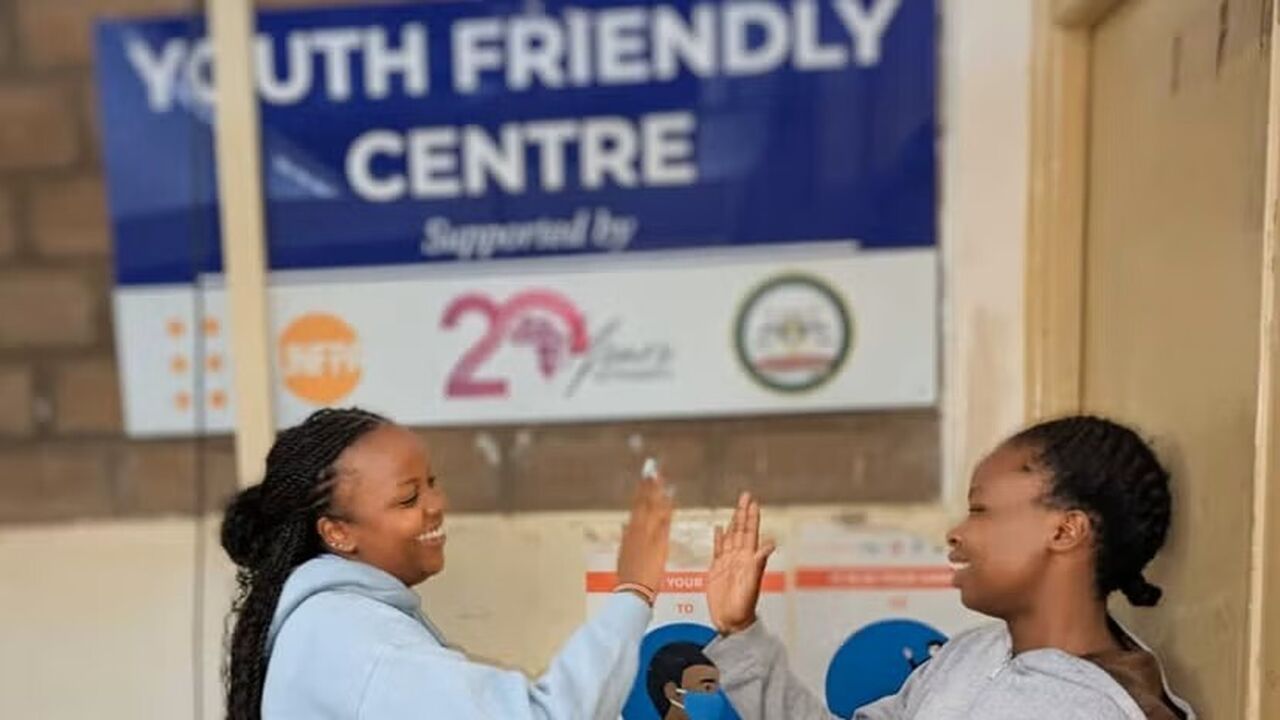
The Kibera Community Health Centre, supported by the joint United Nations programme 2gether 4 SRHR, is working to change that narrative by providing integrated SRH, HIV and GBV services tailored for young people.
Here are four ways the clinic is putting youth care first:
1. Fast-tracking Youth Past the Waiting Room
The facility’s new approach to countering access barriers begins right when a young person arrives at the facility’s gates. Once identified, they are fast-tracked through registration, referred to clinicians in private rooms, and supported with free services where possible.
“We do not allow young people to queue as we understand that they may feel uncomfortable waiting,” shares Wilfred Liongo, facility manager of Kibera Community Health Centre.
2. Eliminating Financial and Administrative Barriers
The clinic has also adapted to the economic realities faced by young people in informal settlements when it comes to healthcare affordability.
“Most young people do not have identification cards, which makes it hard to sign up for the national Social Health Insurance Fund program. Therefore, we have adopted a policy of providing services free of charge regardless of their status,” shares Wilfred.
3. Training Staff to Provide Respectful Care
“Many young people tell us that they enter health facilities and find only older healthcare workers, and this makes them uncomfortable and reluctant to share their concerns,” says Vincent Muinde, a youth advocate and member of the ICPD25 Youth Coalition in Kenya.
Even the best services can fail if healthcare workers unconsciously judge, which is why training has been central to the programme’s impact. “Our healthcare providers have been empowered through training on how to provide youth-friendly services,” Wilfred says. “These sessions have changed attitudes and improved our ability to offer respectful care.”
4. Turning Patients into Peer Advocates
For Michelle (18), the health center has become a safe space that offers information, opportunity, and much-needed care. I attended a session where we discussed family planning, HIV, contraceptives, and how PrEP and PEP work,” she shares.
Inspired by what she learned at the center, she has now become a peer educator. Young girls, particularly those aged 12 - 16, come to her with fears, questions, and problems that adolescents face but are often afraid to seek help for. “Sometimes they ask me to speak to their parents on their behalf,” she highlights.
From clinic doors to the policy tables that shape them
Beyond the clinic doors, young people use tools like the ICPD25 Youth Scorecard to track Kenya’s progress on commitments made, including the elimination of teenage pregnancies, new adolescent and youth HIV infections and harmful practices such as child marriages.
The country also committed to ensuring universal access to friendly, quality reproductive health services and information to the youth and adolescents by 2030.
“One of our recurring recommendations is that youth-friendly health facilities strive to have peer workers or young professionals who create a safe and welcoming environment,” says Vincent.
Through the 2gether 4 SRHR programme, supported by Sweden, young people are helping shape quality of care through feedback mechanisms, including service quality assessments.
By doing so, young people’s voices directly translate into improving care: “Nothing for the youth without the youth,” Vincent emphasizes.
Contribute to the 2gether 4 SRHR Knowledge Hub by submitting the latest research, resources and knowledge products linked to sexual and reproductive health and rights




 Video
 Video